
Breathable Safety Shoes: Do Kickers Models Keep Feet Cool?
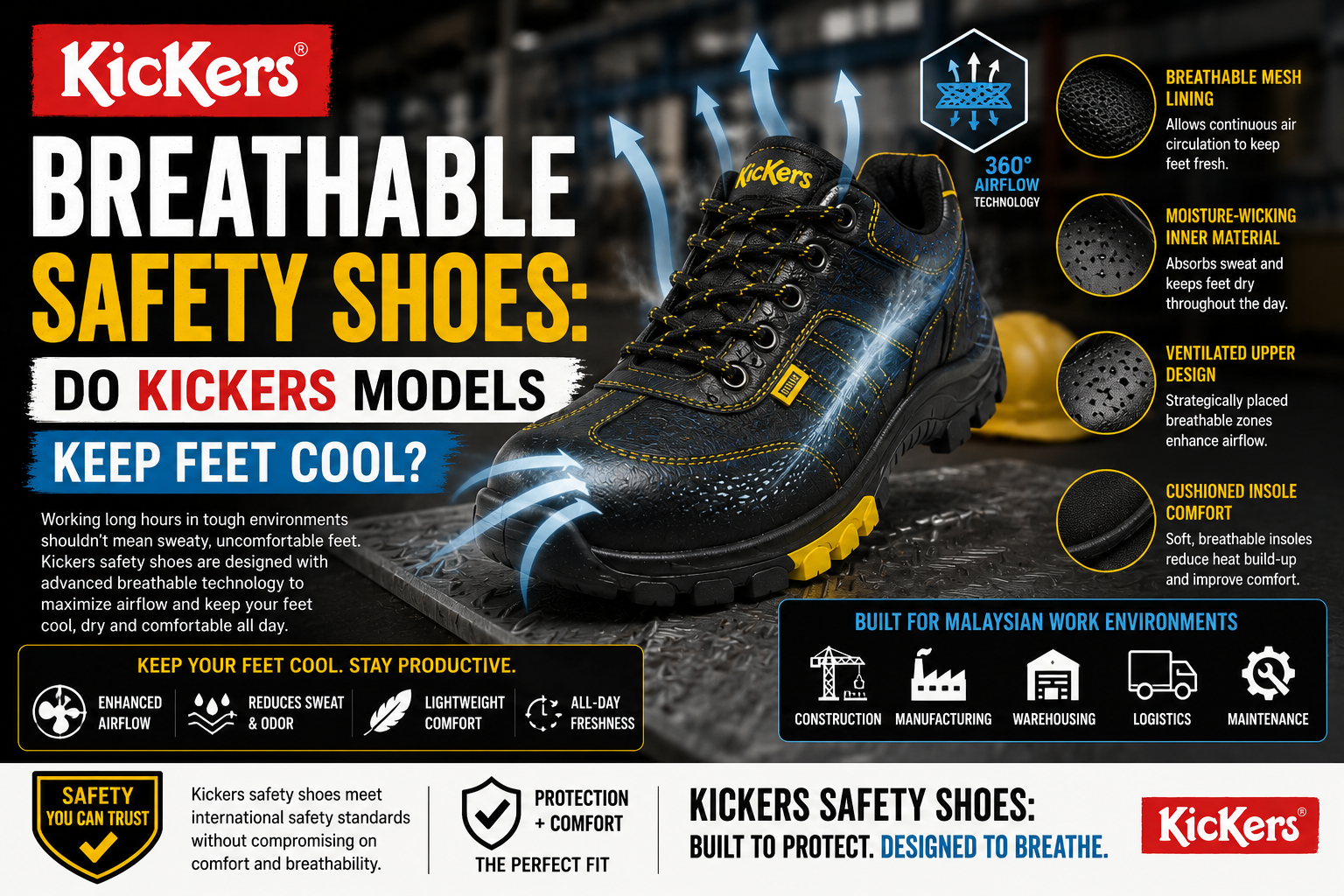
Breathable Safety Shoes: Do Kickers Models Keep Feet Cool?
In the modern industrial and commercial landscape, safety footwear has evolved significantly, branching into diverse categories such as heavy-duty steel-toe boots, lightweight composite-toe trainers, and lifestyle-inspired safety shoes.
Among these, brands like Kickers have gained attention for blending professional aesthetics with workplace protection. When considering whether Kickers safety models effectively keep feet cool, it is essential to examine their material composition and engineering.
Generally, these shoes utilize high-quality leathers and synthetic composites designed to balance durability with moderate airflow. While they are engineered to provide a comfortable internal environment during a standard shift, the level of breathability depends heavily on the specific construction of the model.
Technical Features That Improve Breathability
Integrated Lining
Many Kickers models feature moisture-wicking inner linings that actively disperse sweat away from the skin.
Material Selection
The use of premium, often treated leathers ensures a degree of natural porosity compared to heavy rubber alternatives.
Footbed Technology
Ergonomic insoles are frequently perforated or crafted from open-cell foam to facilitate air circulation under the foot.
Design Limitations
Because these models prioritize safety compliance, they may feature less mesh ventilation than athletic footwear, prioritizing structural integrity over maximum airflow.
Breathability Feature Comparison
| Feature | Benefit | Performance Impact |
|---|---|---|
| Moisture-Wicking Lining | Reduces sweat accumulation | Improves comfort during long shifts |
| Premium Leather Construction | Natural breathability with durability | Balances airflow and protection |
| Perforated Footbeds | Allows underfoot air circulation | Reduces foot fatigue and heat |
| Water-Resistant Treatment | Protects against moisture exposure | Slightly reduces maximum airflow |
| Composite Safety Materials | Lighter than traditional steel components | Improves comfort during movement |